


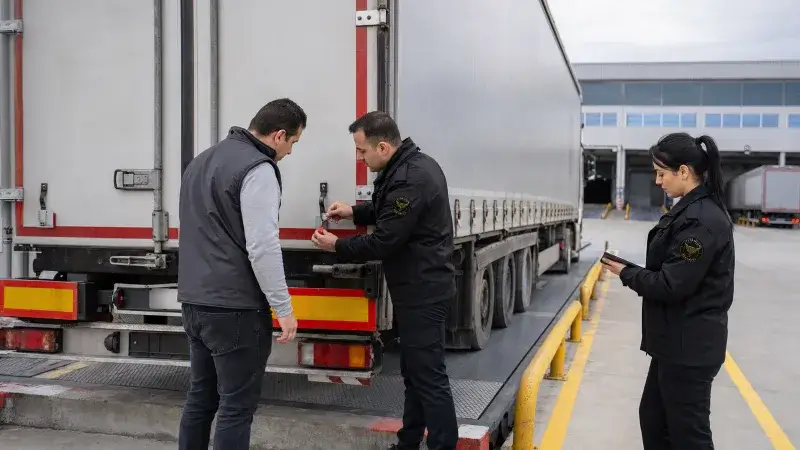
What does Warehouse, Logistics and Distribution Centre Security solve in practice?
The purpose of Warehouse, Logistics and Distribution Centre Security is not to burden normal activity. It makes exposed moments controllable. Inventory loss, vehicle and driver verification, loading gates, seal control, night shifts and dispatch records are converted into a clear service scope against facility layout, critical zones, vehicle movement and continuity priorities. Speed, privacy, records and response can compete during layered protection for large, multi entrance or technically sensitive facilities where business continuity is critical. The operating plan converts those demands into concise rules that the facility security officer can follow under time pressure.
Warehouse loss does not occur only at the shelf; wrong vehicle loading, a missing seal, an unverified driver, an open dock or an unrecorded return can all create discrepancies. This example shows why Warehouse, Logistics and Distribution Centre Security cannot be defined by a desk-based assessment alone. Decisions made during discovery should later be verifiable through inventory-loss findings, vehicle and driver verification records, night-shift and dispatch checks, incident notices and open corrective actions.
Inventory loss within Warehouse, Logistics and Distribution Centre Security
Information management for inventory loss may require exchange between the client representative and the facility security team. The parties agree which data is necessary, who keeps it current and how long it is retained. Warehouse, Logistics and Distribution Centre Security then works from authorised information rather than an old list or verbal assumption and supplies consistent input for vehicle and driver verification.
Within prevention, vehicle and driver verification is not a detail added to a report after an incident. Deviation is notified without delay and closure is confirmed through inventory-loss findings, vehicle and driver verification records, night-shift and dispatch checks, incident notices and open corrective actions.
Operational controls for Loading gates
For Warehouse, Logistics and Distribution Centre Security, loading gates belong in the shift briefing. Normal conditions, unacceptable deviation and the first action by the facility security officer are stated separately. If seal control belongs to another team, notification time and transfer method are also specified. Management later confirms delivery through inventory-loss findings, vehicle and driver verification records, night-shift and dispatch checks, incident notices and open corrective actions, rather than relying on an informal assurance.
As a second control, seal control is not a repetition of the first. It receives a separate owner and success measure. Even if loading gates appear complete, the process remains open when proof of this step is absent from inventory-loss findings, vehicle and driver verification records, night-shift and dispatch checks, incident notices and open corrective actions.
Night shifts and dispatch records: a critical duty point
Within the facility and perimeter, night shifts and dispatch records cannot depend solely on individual experience. Fast judgement from an experienced person matters, but boundaries, notifications and evidence must remain consistent throughout the operating shift. Assurance for Warehouse, Logistics and Distribution Centre Security looks for that standard in inventory-loss findings, vehicle and driver verification records, night-shift and dispatch checks, incident notices and open corrective actions; it examines the information behind a decision as well as the result.
What a Warehouse, Logistics and Distribution Centre Security plan must not miss
A minor deviation in Warehouse, Logistics and Distribution Centre Security can combine with another weakness and produce a serious outcome. For that reason, perimeter breaches, unauthorised entry to critical areas, sabotage, safety deviations and operational interruption are reviewed as a cause and consequence chain. inventory loss, vehicle and driver verification, loading gates, seal control, night shifts and dispatch records support prevention, while first response, notification and recovery order are written into the operating plan.
How is Warehouse, Logistics and Distribution Centre Security mobilised?
Mobilisation includes an facility and perimeter review, role briefing and communication test. Every form, device, list or permission needed for inventory loss, vehicle and driver verification, loading gates, seal control, night shifts and dispatch records must be available to the facility security officer. During the opening days, the Warehouse, Logistics and Distribution Centre Security manager uses inventory-loss findings, vehicle and driver verification records, night-shift and dispatch checks, incident notices and open corrective actions to find recurring uncertainty and simplify instructions where necessary.
- Discovery: inventory loss is observed on site, including the current method and known exceptions.
- Design: ownership and information transfer between vehicle and driver verification and loading gates are documented.
- Preparation: security personnel, patrol vehicle, control devices, site plan and access permissions required for Warehouse, Logistics and Distribution Centre Security are confirmed before launch.
- Assurance: delivery is demonstrated to management with relevant records from inventory-loss findings, vehicle and driver verification records, night-shift and dispatch checks, incident notices and open corrective actions.
Service levels for Warehouse, Logistics and Distribution Centre Security
Provider experience in Warehouse, Logistics and Distribution Centre Security should not remain an unsupported statement. Review the instruction, report example and change process intended for inventory loss, vehicle and driver verification, loading gates, seal control, night shifts and dispatch records. Clear agreement on boundaries, client responsibilities, assurance, confidentiality and access to inventory-loss findings, vehicle and driver verification records, night-shift and dispatch checks, incident notices and open corrective actions reduces expectation gaps after mobilisation. The Warehouse, Logistics and Distribution Centre Security owner confirms completion from the relevant record.
Decisions clients make about Warehouse, Logistics and Distribution Centre Security
How is Inventory loss measured during an audit?
During an audit, inventory loss is not measured only by activity volume. For Warehouse, Logistics and Distribution Centre Security, accuracy, timing, exception handling and open actions also matter. If inventory-loss findings, vehicle and driver verification records, night-shift and dispatch checks, incident notices and open corrective actions show repeated deviation, the review looks for a cause in instructions, competence, resources or technical support.
How are Vehicle and driver verification verified?
The Warehouse, Logistics and Distribution Centre Security plan assigns vehicle and driver verification to a named role. It also identifies the deputy and expected notification time. If loading gates belong to another function, security personnel know what information that function needs and when it must be delivered.
Who owns Loading gates within Warehouse, Logistics and Distribution Centre Security?
Yes. A material change to loading gates may affect seal control and the resource plan. For Warehouse, Logistics and Distribution Centre Security, duration, location and exposure are reviewed. A temporary case can use a short instruction, while permanent change updates this service duty, briefing and assurance measures together.
Ankara based Warehouse, Logistics and Distribution Centre Security delivery
A useful Warehouse, Logistics and Distribution Centre Security proposal requires basic information about the person, area or asset, daily movement and expected service period. Titanium Security assesses layered protection for large, multi entrance or technically sensitive facilities where business continuity is critical through its Ankara operating structure. Discovery confirms inventory loss, vehicle and driver verification, loading gates, seal control, night shifts and dispatch records, followed by a duty plan that can be monitored through inventory-loss findings, vehicle and driver verification records, night-shift and dispatch checks, incident notices and open corrective actions. The Warehouse, Logistics and Distribution Centre Security owner confirms completion from the relevant record.