


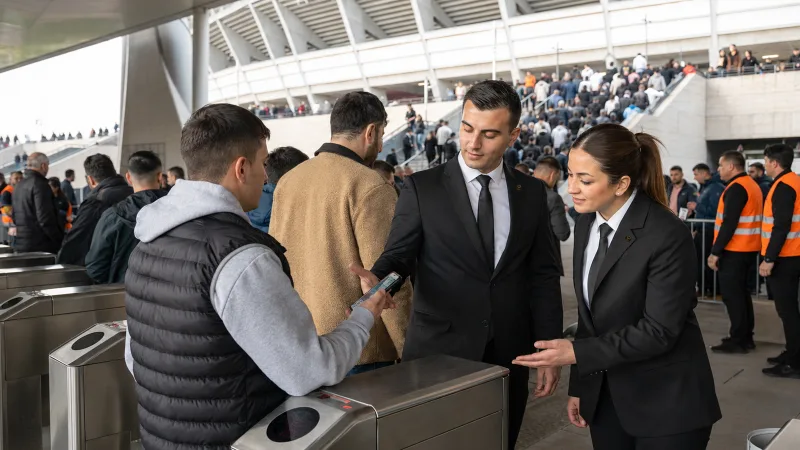
Conditions that shape Sports Event Security
Sports Event Security is a specialist capability used for the joint management of entry, circulation, stage areas, restricted zones and evacuation while protecting the attendee experience. Planning connects supporter groups, turnstile demand, stand separation, prohibited item checks, field access and managed dispersal to defined duties after reviewing site capacity, attendee flows, programme timing and emergency exits. Scope is not defined only by headcount, equipment quantities or working hours. Daily movement, the person or asset at risk, authority limits and the people who make decisions during an incident must be understood together. A proposal prepared without this information can underestimate field demand and spend resources at the wrong control point.
Sports security does not end at ticket checks; supporter arrival routes, turnstile load, stand separation, field perimeter and post match dispersal belong in one timed plan. Performance becomes visible when an exception of this kind occurs. Alignment between the instruction and supporter groups results, turnstile demand records, field access and managed dispersal verification, incident notices and open corrective actions is therefore tested at mobilisation.
How are Supporter groups managed?
For Sports Event Security, supporter groups is not checked only at mobilisation. It is reviewed when a shift, programme, user or technical condition changes. A local adjustment made without considering turnstile demand may create a gap elsewhere. The responsible manager approves the final change and ensures the revised control enters the operational record.
Turnstile demand within Sports Event Security
Information management for turnstile demand may require exchange between the client representative and the event security team. The parties agree which data is necessary, who keeps it current and how long it is retained. Sports Event Security then works from authorised information rather than an old list or verbal assumption and supplies consistent input for stand separation.
Operational controls for Stand separation
For Sports Event Security, stand separation belongs in the operations briefing. Normal conditions, unacceptable deviation and the first action by the event officer are stated separately. If prohibited item checks belong to another team, notification time and transfer method are also specified. Management later confirms delivery through supporter groups results, turnstile demand records, field access and managed dispersal verification, incident notices and open corrective actions, rather than relying on an informal assurance.
Prohibited item checks: a critical duty point
Within the event site, prohibited item checks cannot depend solely on individual experience. Fast judgement from an experienced person matters, but boundaries, notifications and evidence must remain consistent throughout the event programme. Assurance for Sports Event Security looks for that standard in supporter groups results, turnstile demand records, field access and managed dispersal verification, incident notices and open corrective actions; it examines the information behind a decision as well as the result. The Sports Event Security owner confirms completion from the relevant record.
Field access and managed dispersal in the Sports Event Security plan
Within Sports Event Security, field access and managed dispersal is a distinct decision point with a practical outcome. The event officer needs to know what information to check, who resolves uncertainty and which record closes the action. If it is not connected to supporter groups, a correct first control can lose value at the following stage. The instruction is therefore written from the real flow in the event site, not copied from broad wording used for Event and Organisation Security.
Pressure points in Sports Event Security
Applying the strongest possible measure to every risk is not sound resource use. Discovery for Sports Event Security prioritises uncontrolled crowds, false accreditation, capacity breaches, unauthorised restricted access and loss of direction during panic through evidence, history and observation. supporter groups, turnstile demand, stand separation, prohibited item checks, field access and managed dispersal are directed to higher exposures without slowing low risk daily activity through unnecessary procedures.
Before Sports Event Security goes live, supporter groups, turnstile demand, stand separation, prohibited item checks, field access and managed dispersal is checked in the event site. Peak demand, a change in the event programme or technical outage can disprove a desk assumption. Findings create a baseline within supporter groups results, turnstile demand records, field access and managed dispersal verification, incident notices and open corrective actions; later assurance compares current performance against it. The result is also shown in the Sports Event Security assurance record.
Starting the Sports Event Security operation
- Discovery: supporter groups is observed on site, including the current method and known exceptions.
- Design: ownership and information transfer between turnstile demand and stand separation are documented.
- Preparation: event personnel, barriers, screening equipment, accreditation lists and radio plan required for Sports Event Security are confirmed before launch.
Mobilisation for Sports Event Security begins before personnel arrive on site. The parties agree supporter groups, turnstile demand, stand separation, prohibited item checks, field access and managed dispersal, approve instructions and contacts, then prepare the required permissions. After the first shift or assignment, supporter groups results, turnstile demand records, field access and managed dispersal verification, incident notices and open corrective actions are reviewed and any part of the plan that does not match field reality is corrected.
Practical questions about Sports Event Security
What evidence is needed for Supporter groups?
Evidence for supporter groups reflects the risk. Within Sports Event Security, it may be a checklist, time stamp, photograph, system transaction or manager approval. The goal is not excessive collection; the record shows that the duty was completed and exceptions received the correct decision.
Does a change in Turnstile demand alter the scope?
During an audit, turnstile demand is not measured only by activity volume. For Sports Event Security, accuracy, timing, exception handling and open actions also matter. If supporter groups results, turnstile demand records, field access and managed dispersal verification, incident notices and open corrective actions show repeated deviation, the review looks for a cause in instructions, competence, resources or technical support.
Planning Sports Event Security in Ankara
A useful Sports Event Security proposal requires basic information about the person, area or asset, daily movement and expected service period. Titanium Security assesses the joint management of entry, circulation, stage areas, restricted zones and evacuation while protecting the attendee experience through its Ankara operating structure. Discovery confirms supporter groups, turnstile demand, stand separation, prohibited item checks, field access and managed dispersal, followed by a duty plan that can be monitored through supporter groups results, turnstile demand records, field access and managed dispersal verification, incident notices and open corrective actions.